
Small Business Administration (SBA) loans are renowned for providing some of the most competitive interest rates available in business financing.
These loans are issued by lenders approved by the federal agency and are backed by an SBA loan guarantee, which can cover up to 90% of the borrowed amount.
Below is an overview of current interest rates for one of the most popular SBA loan programs, including both variable and fixed-rate loans. It’s important to note that these rates represent the maximum allowable percentages; the rate you are quoted cannot exceed these limits and may be lower.
Keep reading to learn more about the current SBA loan rates and how they can benefit your business.
Current Maximum Variable Interest Rates for SBA 7(a) Loans
| Loan Amount | If Repayment Terms Are Less Than 7 Years | If Repayment Terms Are More Than 7 Years |
| $25,000 or less | 11.75% | 12.25% |
| $25,001-$50,000 | 10.75% | 11.25% |
| More than $50,000 | 9.75% | 10.25% |
Current Maximum Fixed Interest Rates for SBA 7(a) Loans
| Loan Amount | Maximum Interest Rate |
| $25,000 or less | 15.5% |
| $25,001-$50,000 | 14.5% |
| $50,000-$250,000 | 13.5% |
| More than $250,000 | 12.5% |
Current Maximum Interest Rates for SBA Express Loans
| Loan Amount | Maximum Interest Rate |
| $50,000 or less | 14% |
| More than $50,000 | 12% |
*As of Dec. 15, 2022, based on a prime rate of 7.5%
There’s a full breakdown of SBA loans on the agency’s website, where you’ll find details on the following:
- Who qualifies for these loans
- SBA loan interest rates and terms
- Maximum financing amount offered
We’re going to focus specifically on SBA 7(a) and SBA CDC/504 loans.
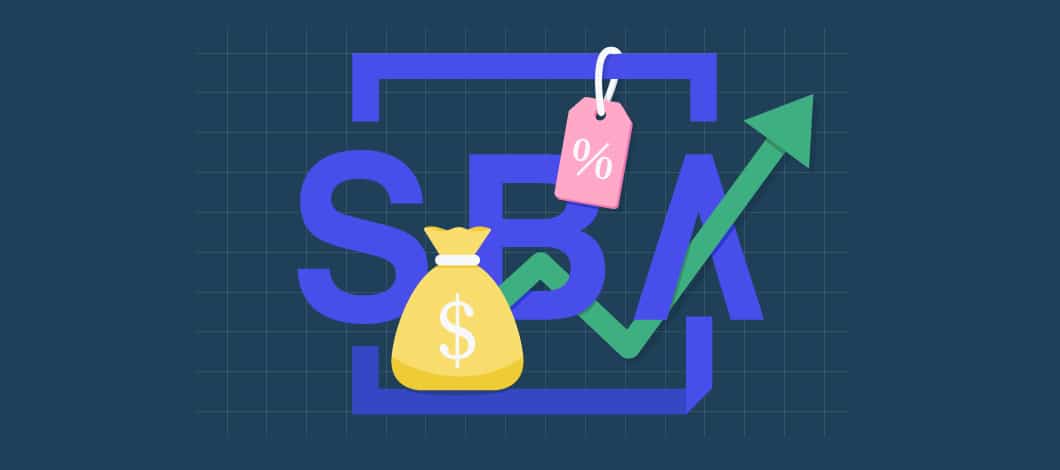
Overview of the SBA 7(a) Loan Program
The SBA 7(a) loan program is the standard and most widely utilized option, offering a loan guarantee of 85% for loans up to $150,000 and 75% for larger loans. For SBA Express loans, a variation of the 7(a) program, the maximum guarantee is 50%, while Export Express loans can offer guarantees up to 90%. These guarantees help reduce the risk for lenders providing funds to small businesses.
To qualify for an SBA 7(a) loan, your business must meet the SBA’s definition of a small business, which can be verified using their online size standards tool. Additional essential requirements include:
- Your business must operate for profit.
- It must be physically located in the U.S. or its territories.
- The loan must be intended for a legitimate business purpose.
- Your business must not owe any debts to the U.S. government.
- You must have invested your own time and/or money into the business.
As with any business loan application, applying for an SBA 7(a) loan requires submitting various documents, such as financial statements and a detailed business plan.
Established businesses seeking SBA-guaranteed financing typically need a solid credit score, often around 680 or higher. However, the SBA recognizes that some startups may qualify for funding even with less favorable credit histories. Ultimately, the lender will assess your application to determine eligibility.
By meeting these criteria and providing the necessary documentation, you can improve your chances of securing an SBA 7(a) loan to support your business growth and operations.
Requirements for Qualifying for an SBA Loan
To qualify for an SBA 7(a) loan, your business generally needs to meet the following criteria:
- Your business has been operational for at least the past 2 years.
- You have a credit score of 680 or higher.
- Your business generates a minimum of $50,000 in annual revenue.
It’s important to note that SBA Express Loans, Export Loans, and CAPLines are all part of the 7(a) Loan program.
Fixed and Variable Interest Rates for SBA Loans
An SBA 7(a) loan can feature either a fixed or variable interest rate. A fixed rate remains constant throughout the loan’s duration, providing predictable monthly payments. In contrast, a variable rate can fluctuate either monthly or quarterly, depending on changes to the base rate.
Factors Influencing SBA 7(a) Loan Rates
Interest rates for SBA loans can differ among lenders, but they are all subject to maximums set by the Small Business Administration (SBA). Lenders typically add an additional percentage to the base rate of the loan. The amount of additional interest a lender can charge is often influenced by factors such as the term length of the loan and the total amount borrowed.
Lenders adhere to SBA guidelines that establish the maximum interest rates permissible for different types of SBA loans. These rates ensure that borrowers are protected from excessive interest charges while allowing lenders to manage their risks effectively. Factors like the term of the loan and the size of the loan can impact the additional interest percentage that lenders may apply.
It’s important for borrowers to compare offers from different lenders to ensure they are getting the most competitive terms and rates available within the SBA guidelines. Understanding how additional interest rates are determined can help businesses make informed decisions when selecting a lender for their SBA loan.
Understanding the SBA Base Rate
SBA loan rates today are based on 1 of the following:
- Prime rate (7.5% as of Dec. 15, 2022)
- SBA peg rate
- LIBOR: This stands for London Interbank Offered Rate, considered a benchmark interest rate for major banks
Current Interest Rates for SBA 7(a) Loans
The current maximum interest for SBA 7(a) variable-rate loans cannot exceed the following:
- For loan terms less than 7 years:
- $0-$25,000: Prime rate + 4.25% = 7.5% + 4.25% = 11.75%
- $25,001-$50,000: Prime rate + 3.25% = 7.5% + 3.25% = 10.75%
- $50,000 and up: Prime rate + 2.25% = 7.5% + 2.25% = 9.75%
- For loan terms 7 years or longer:
- $0-$25,000: Prime rate + 4.75% = 7.5% + 4.75% = 12.25%
- $25,001-$50,000: Prime rate + 3.75% = 7.5% + 3.75% = 11.25%
- $50,000 and up: Prime rate + 2.75% = 7.5% + 2.75% = 10.25%
The current maximum interest for SBA 7(a) fixed-rate loans cannot exceed the following:
- $25,000 or less: Prime rate + 6% +2%* = 7.5% + 6% + 2% = 15.5%
- $25,000-$50,000: Prime rate + 6% + 1%* = 7.5% + 6% + 1% = 14.5%
- $50,000-$250,000: Prime rate + 6% = 7.5% + 6% = 13.5%
- $250,000 or more: Prime rate + 5% = 7.5% + 5% = 12.5%
*Permitted by 13 CFR 120.215
For SBA Express and Export Express loans, which fall under the 7(a) program, interest rate maximums are:
- $50,000 or less: Prime + 6.5% = 7.5% + 6.5% = 14%
- More than $50,000: Prime + 4.5% = 7.5% +4.5% = 12%
Current Interest Rates for SBA 504 Loans
The SBA CDC/504 loan program is tailored to finance fixed assets such as real estate, machinery, or land, and is facilitated through Certified Development Companies (CDCs) and other financial partners.
Typically, funding for an SBA CDC/504 loan is structured as follows: up to 40% of the total project costs are provided by the CDC, up to 50% by the lender, and a minimum of 10% is contributed by your business as equity. The CDC portion can fund up to a maximum amount, which varies but generally ranges from $5 million to $5.5 million. These loans feature fixed-rate terms of 10, 20, or 25 years, providing stability and predictability in repayments.
For example, according to the latest data from the SBA, the current interest rates for the CDC portion of SBA 504 loans are 2.231% for 10-year terms, 2.364% for 20-year terms, and 2.399% for 25-year terms. These rates are designed to be competitive and advantageous for businesses seeking long-term financing for substantial investments in their operations.
It’s recommended to consult directly with your CDC partner for the most up-to-date information on interest rates and specific terms applicable to your SBA CDC/504 loan. Understanding these details will help you effectively plan and secure financing for your business’s growth and expansion initiatives.
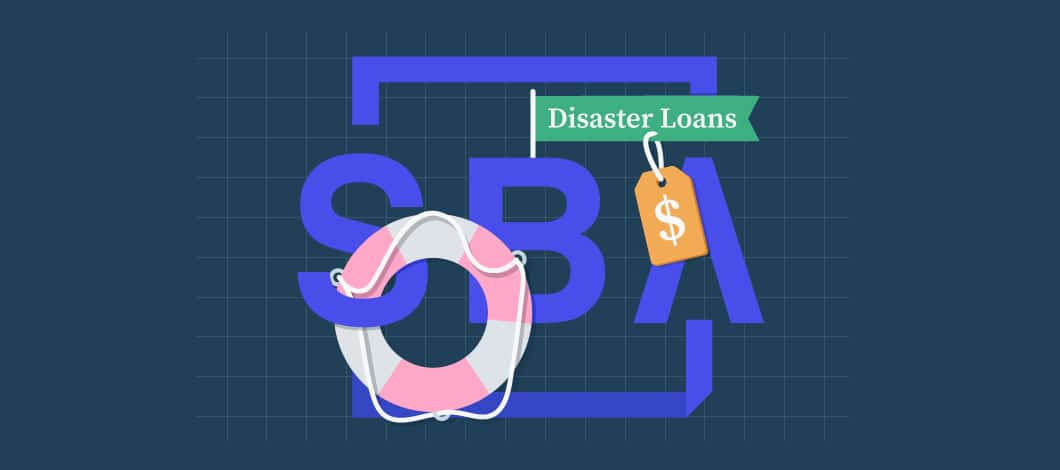
Current SBA Disaster Loan Rates
The COVID Economic Injury Disaster Loan (EIDL) program has ceased accepting new applications, but the standard EIDL program continues to support small businesses located in designated disaster areas that have faced significant economic challenges.
Under this program, eligible applicants can receive up to $2 million in funding, featuring an interest rate cap of 4%. Repayment terms extend up to 30 years, providing flexibility for businesses to manage their cash flow effectively. These funds are intended to support various operational needs, including working capital and essential expenses such as rent, fixed debt payments, and utilities.
The EIDL program remains a crucial lifeline for businesses recovering from disasters, offering long-term financing solutions with favorable terms to help them stabilize and rebuild. Businesses interested in this program should check eligibility requirements and consult with the Small Business Administration (SBA) for the most current information and application details.
The Bottom Line on SBA Loan Rates and Terms
SBA commercial loan rates are highly favored among small businesses for their attractive repayment terms and extended durations. These loans are bolstered by the SBA’s guarantee, which minimizes risk for lenders by covering a substantial portion of the loan amount in case of default.
Despite these advantages, one notable drawback of SBA loans is the lengthy application process, often spanning several weeks to months. This extended timeline can be a challenge for businesses in urgent need of funds.
Before committing to any financing option, it’s essential to conduct comprehensive research. Evaluate factors such as the processing time required for your application and seek clarity on loan rates, including how they are determined and their stability over the loan term. Understanding these aspects ensures that you make informed decisions aligned with your business’s financial goals and operational needs.
By leveraging the benefits of SBA-guaranteed loans while being aware of the associated challenges, small businesses can effectively navigate the financing landscape to support growth and resilience.